
The quick version
| Window | What's allowed |
|---|---|
| Windshield | A non-reflective strip across the top 4 inches |
| Front side windows | Must let at least 70% of light through, with the film on |
| Rear side windows | Any darkness |
| Back window | Any darkness, with mirrors on both sides of the car |
Front side windows
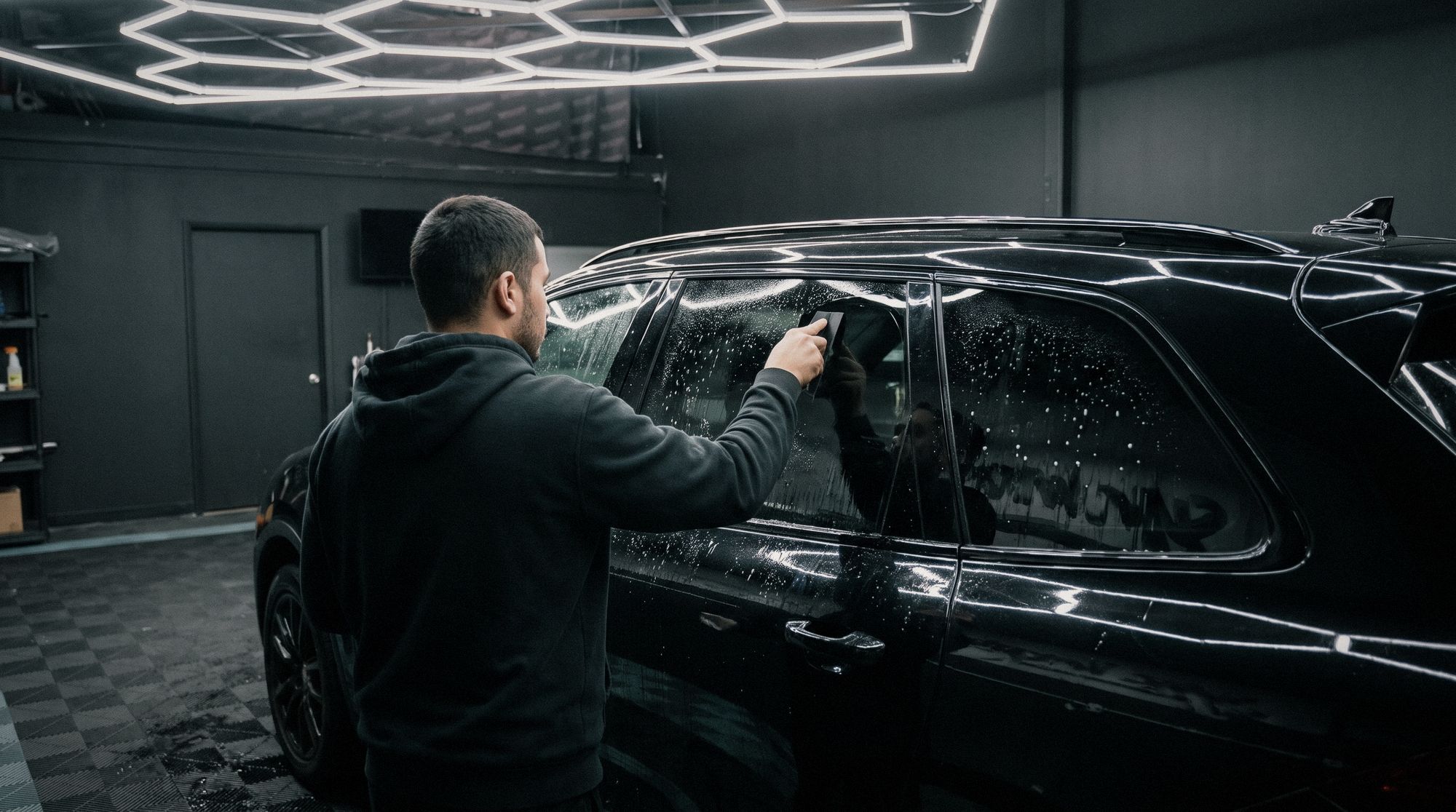
This is the one that trips people up. The 70% rule applies to the glass and film together. Factory glass already blocks some light, so a film rated at 70% on its own will usually take the window below the limit. In practice, the front sides take a clear or very light film. A clear ceramic film can still cut a lot of heat and block UV without darkening the glass.
Rear windows
Rear side windows and the back window can be as dark as you like, including 5% limo tint, as long as the car has outside mirrors on both sides.
Reflective and colored film
Mirror finish films and certain colors aren't allowed. Quality ceramic films are non-reflective and neutral in color.
Medical exemptions
California allows darker front tint for certain medical conditions with documentation from a doctor. If this applies to you, bring the paperwork and we'll talk through options.
Why ceramic
Because the front windows have to stay light, heat rejection matters more than darkness. Nano ceramic film blocks infrared heat and 99% of UV even in light shades. Our tint starts at $380 with a lifetime film warranty.
This guide is a general summary of California Vehicle Code 26708 as commonly applied, not legal advice. Rules can change, so check the current code or ask the DMV if you're unsure.