
The short answer
Paint protection film is a physical layer that stops rock chips and scratches. Ceramic coating is a thin, hard layer that adds gloss and makes the car easier to wash. If you're worried about chips on the freeway, you want PPF. If you want the paint to look glossy and stay clean longer, you want ceramic. Many owners do both.
What PPF does
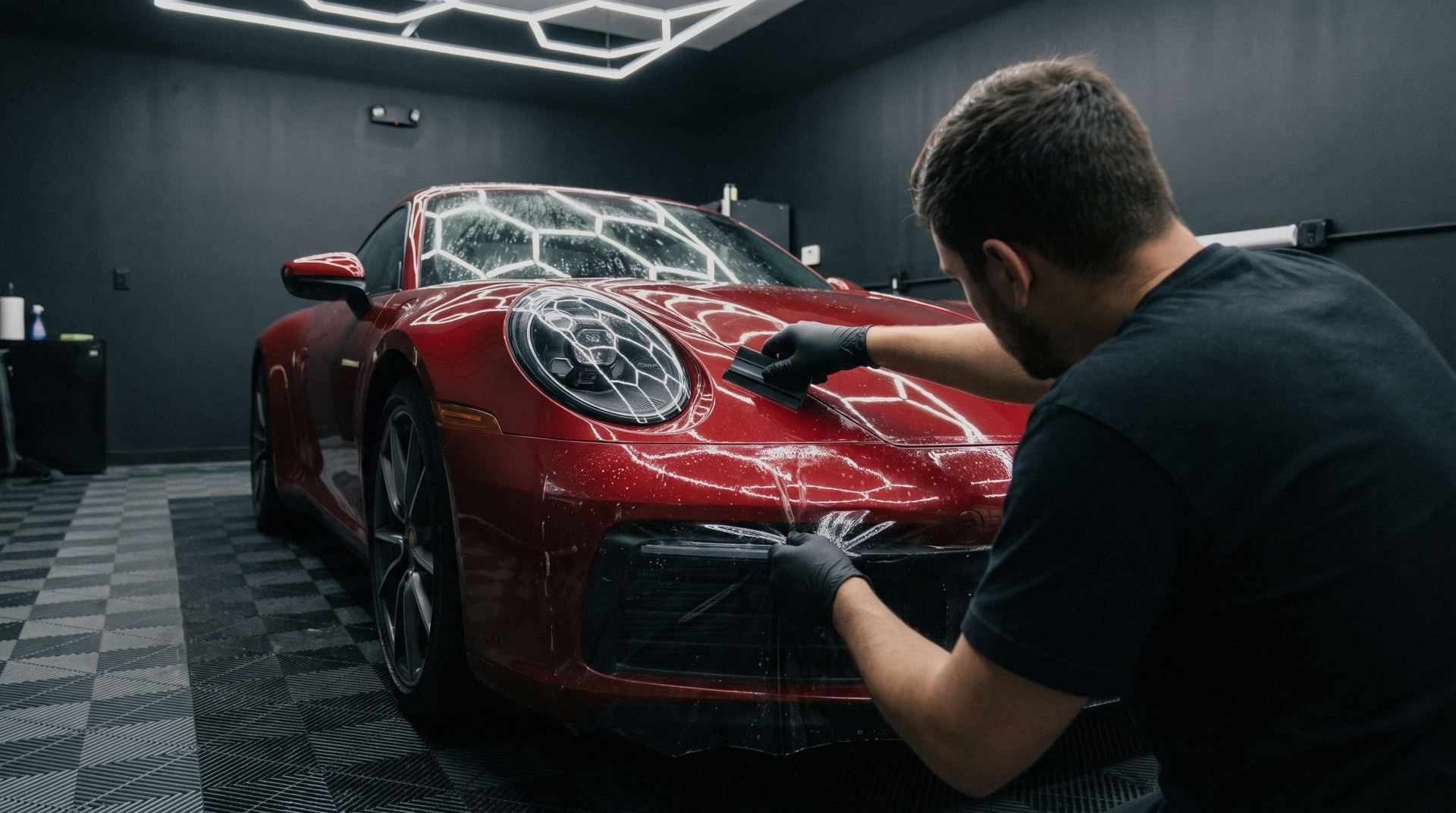
PPF is a clear urethane film, usually around 8 thousandths of an inch thick, laid over the paint. It absorbs impacts from road debris, takes light scratches and protects against bug and bird etching. Most quality films have a self healing top coat, so light swirls fade with heat.
- Stops: rock chips, light scratches, swirl marks, chemical etching
- Lasts: around 10 years with care
- Looks: close to invisible on gloss paint, or satin with a matte film
What ceramic coating does
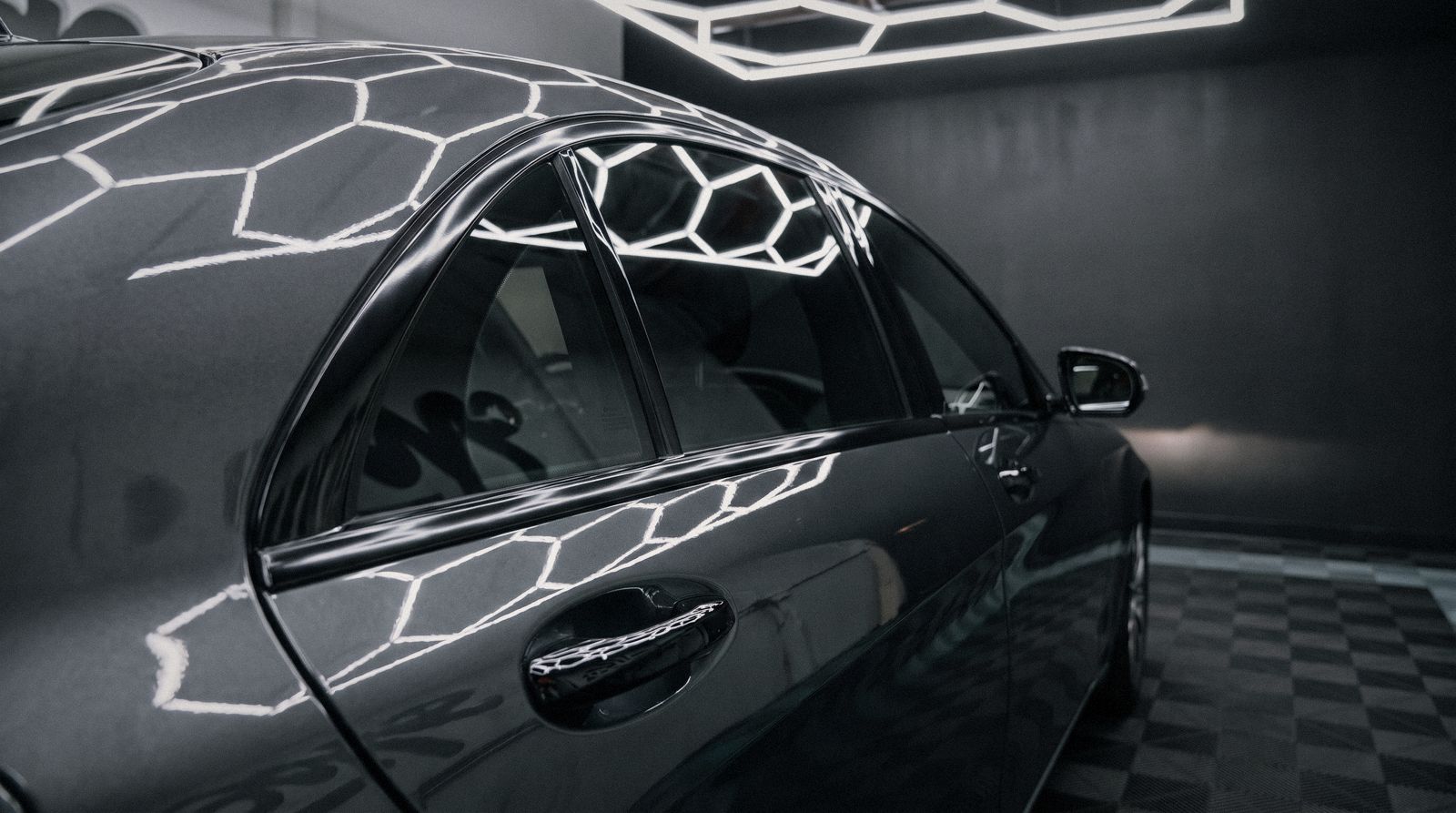
A ceramic coating is a liquid that bonds to the paint and cures into a hard, slick layer. Water beads off, dirt doesn't stick as easily and the paint has a deeper gloss. It won't stop a rock chip.
- Helps with: gloss, easy washing, light UV and chemical resistance
- Doesn't stop: rock chips or real scratches
- Lasts: a few years, depending on the product and care
PPF protects the paint. Ceramic makes it easier to keep clean. They aren't competing products.
Side by side
| PPF | Ceramic coating | |
|---|---|---|
| Rock chips | Stops them | No real protection |
| Light scratches | Self heals | Some resistance |
| Gloss and easy washing | Good | Excellent |
| Can change the finish | Yes, matte film | No |
| Typical lifespan | About 10 years | A few years |
What it costs at Sync
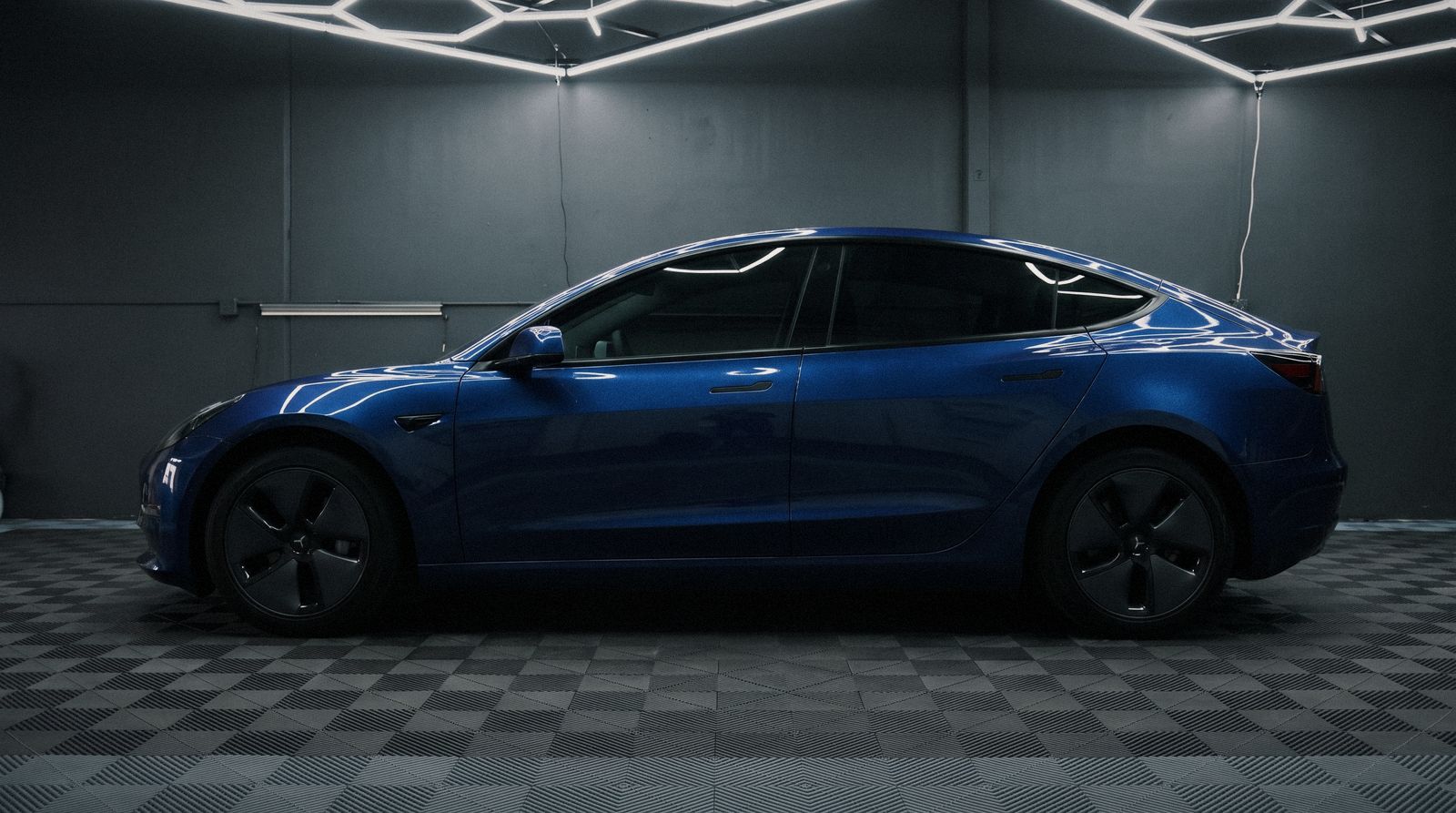
Full front PPF starts at $1,500 for a car the size of a Tesla Model 3. Partial front, full body and larger vehicles are priced per car. Ask us about ceramic when you get your PPF quote.
Our take
If the car sees freeway miles, put PPF on the front at minimum. That's where chips happen. Add ceramic over the film and the rest of the paint if you want it to wash easier and stay glossy.